How to revise without your phone
A practical plan for revising with your phone out of the way: what to block, how long to study for, and how to keep going through exam season.
You sit down to revise, check one message, and twenty minutes later you’re watching someone else’s revision vlog. The phone isn’t the only thing between you and your grades, but it’s usually the first.
This is a practical plan for revising with your phone out of the way. It works for GCSEs, A levels and university exams, with or without an app.
The plan in one minute
- Decide what the session is for before you sit down.
- Block the apps that distract you, and keep the ones you study with.
- Put your phone, or the thing that unlocks it, in another room.
- Work in fixed blocks with real breaks.
- Test yourself and spread revision out, instead of rereading.
- Plan the week, and protect your sleep.
1. Decide the session before you sit down
“Revise biology” isn’t a plan. “Do the 2024 paper 2, questions 1 to 6, then mark it” is. When you know exactly what you’re doing, there’s less of the drifting moment where the phone sneaks in.
Write the task at the top of the page, and choose a length:
- 25 minutes on, 5 off (the Pomodoro method) is good for getting started and for subjects you find hard.
- 50 minutes on, 10 off suits past papers and essays, where getting going takes a while.
2. Block the distractions, keep the tools
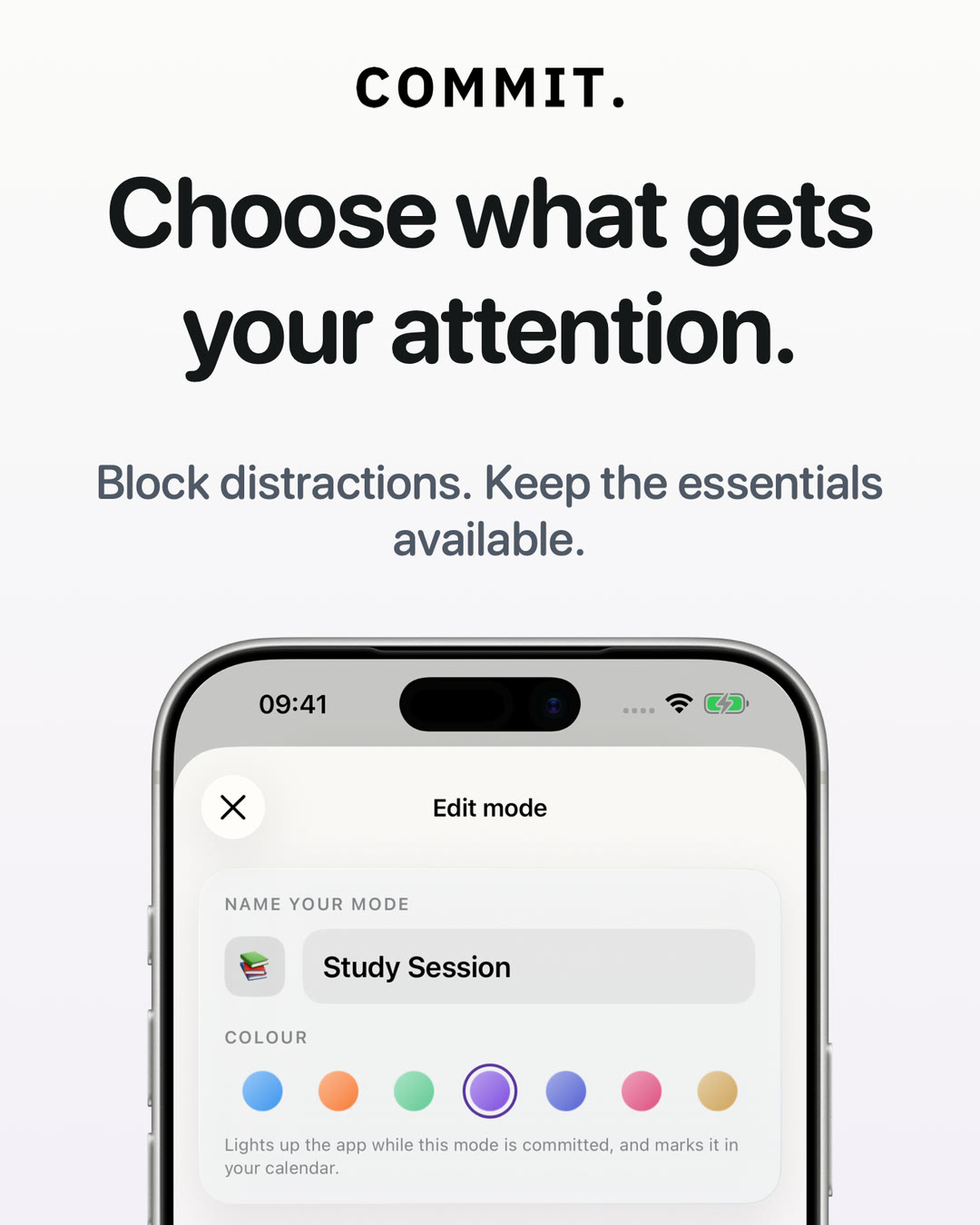
Switching your phone off completely often doesn’t last, because you need it for flashcards, a timer or music. The better approach is to block the specific apps that pull you away:
- Block: social media, video, games, and the browser if you tend to wander.
- Keep: your flashcard app, calculator, timer, music and messages from family.
On iPhone, Screen Time can limit categories of apps. In Commit, create an “Allow selected” mode that keeps only your study apps, or use Maximum Focus to block nearly everything.
3. Put it in another room
Face down on the desk isn’t the same as gone. If the phone is within reach, checking it takes no decision at all. If it’s in the kitchen, you have to get up.
In a 2017 study, people did slightly worse on attention and memory tasks when their phone was on the desk than when it was in another room, even with it switched off. Later attempts to repeat the result have been mixed, but the practical point stands: out of reach beats out of sight.
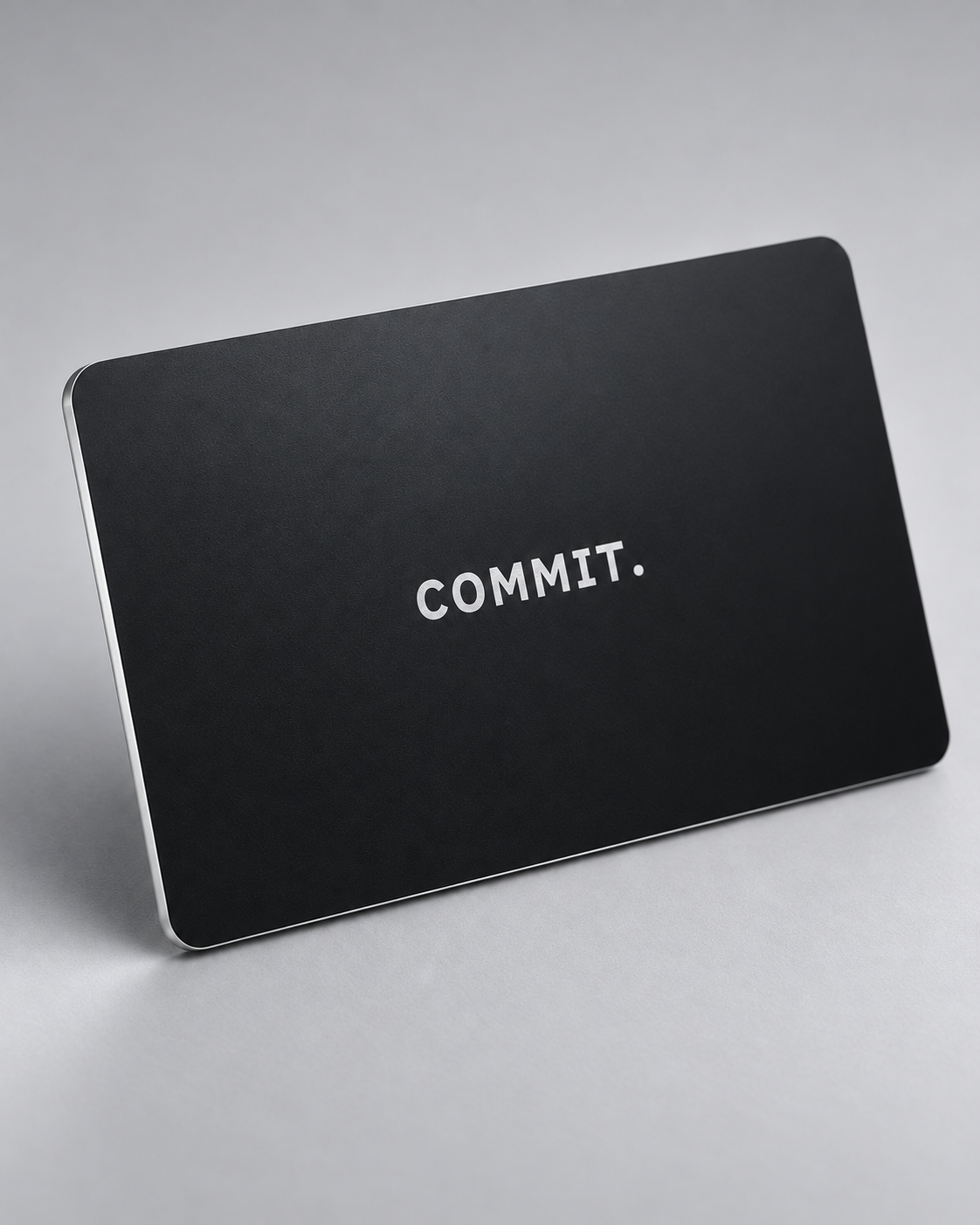
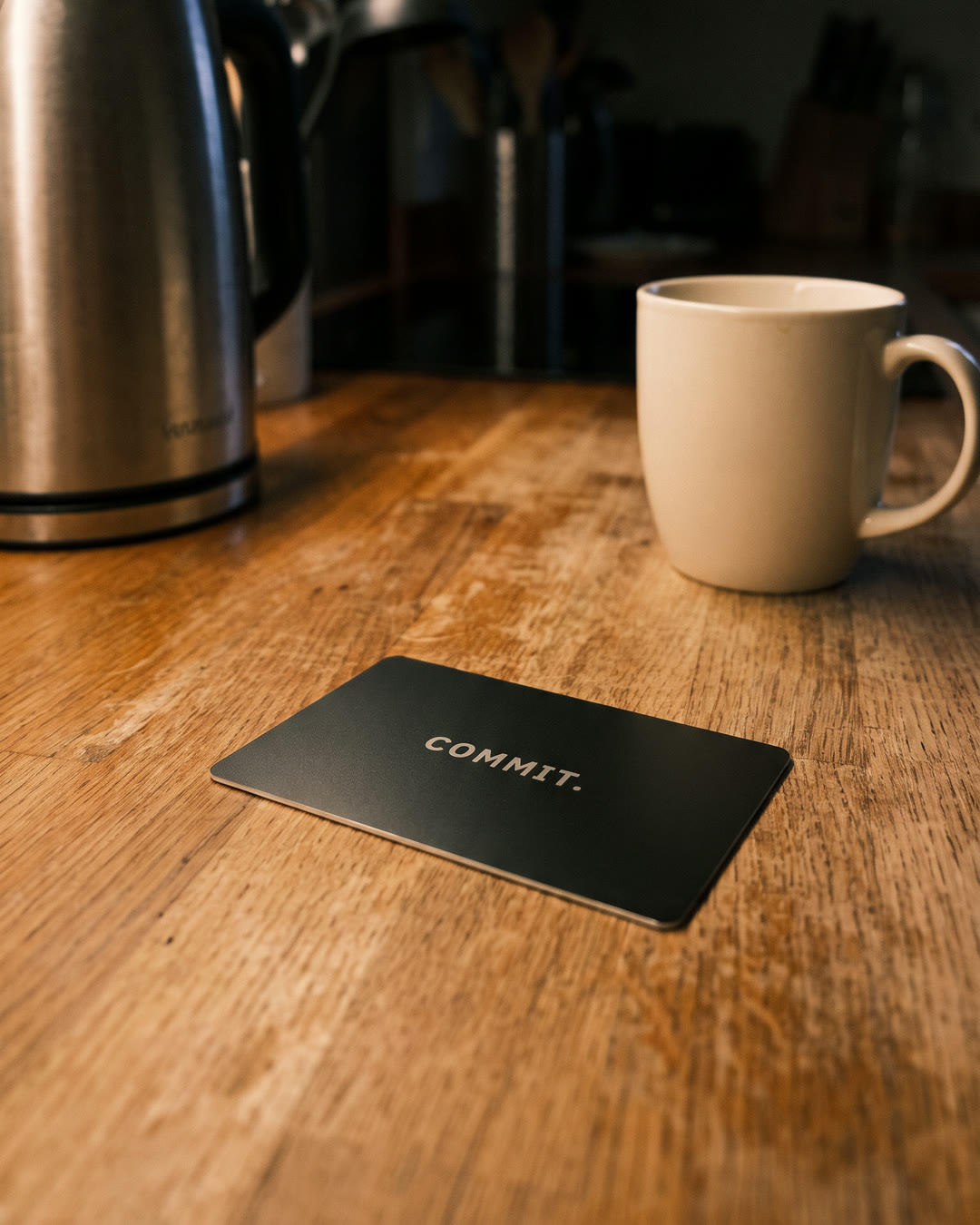
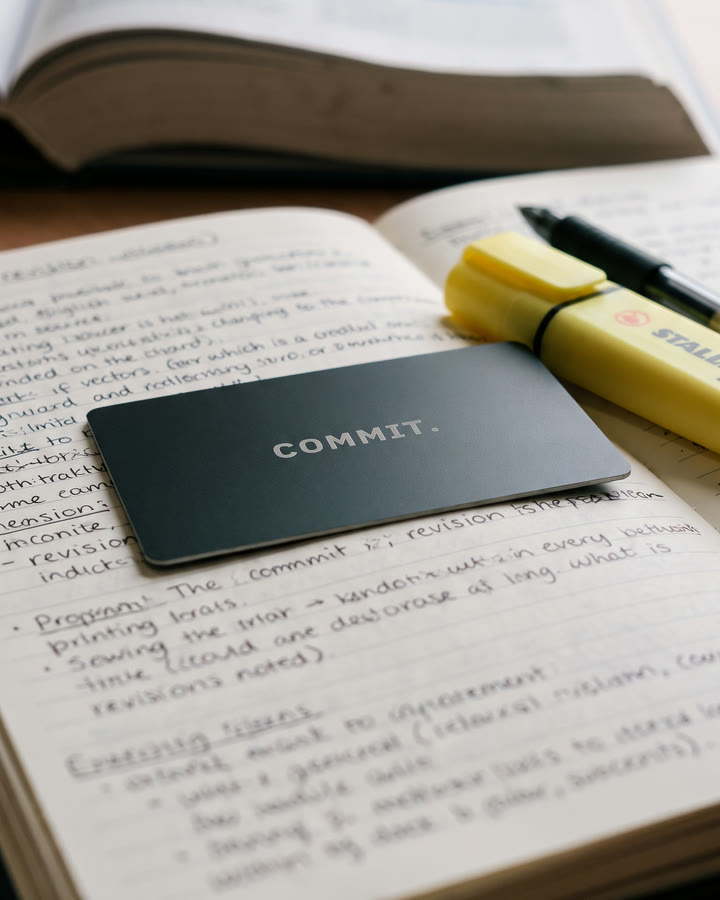
With Commit, you don’t have to leave the phone behind. Leave the card. Start a Commit with your study mode, put the card in the kitchen, and your blocked apps stay blocked until you walk there and scan it.
4. Take real breaks
A break spent scrolling isn’t a break. It fills your head with new things just as you’re trying to hold on to what you learned, and five minutes easily turns into twenty-five.
Get up, get a drink, look out of a window, walk round the block. If you need your phone during a long break, end the session properly by going to your card, then start a new one when you sit back down.
5. Revise the way that works
No phone setup helps if the revision itself isn’t effective. A large 2013 review of study techniques by John Dunlosky and colleagues rated two methods as the most useful:
- Practice testing: past papers, flashcards and closing the book to write down everything you remember.
- Spaced practice: coming back to a topic over several days or weeks, instead of cramming it once.
The same review rated rereading, highlighting and summarising as much less useful, even though they feel productive.
6. Plan the week, not just the day
Spaced practice only happens if it’s planned. On Sunday, block out your revision sessions for the week, with each subject appearing two or three times.
Commit can put those sessions on your calendar. In Plan, touch and hold an empty time to place a Commit, or tap an existing calendar event, such as “Chemistry revision”, to attach one to it. If the event moves, the Commit moves with it. For every weekday, set a routine instead, such as 4pm to 6pm, Monday to Friday.
7. Revise with friends, phones away
Studying with friends helps with motivation, and makes it easy to waste an afternoon together. Agree on phones first.
Group Commits do this for you. One person hosts and shares a QR code. Everyone chooses their own apps to block on their own phone, and the group starts together. Friends only need the free Commit app, not a card or an account. Everyone finishes by scanning the host’s card at the end, or when the agreed time is up. Groups can have up to 20 people, which is enough for a library table.
8. Protect your sleep
Sleep is when a lot of what you learned gets consolidated, and late-night scrolling eats into it more than late-night revision does. In exam season, keep a regular bedtime and keep the phone out of the bedroom. Our guide to stopping scrolling in bed has the details.
Sources
- Dunlosky, J. et al. (2013). Improving students’ learning with effective learning techniques. Psychological Science in the Public Interest, 14(1), 4–58.
- Ward, A. F. et al. (2017). Brain drain: the mere presence of one’s own smartphone reduces available cognitive capacity. Journal of the Association for Consumer Research, 2(2).
Questions
- How long should a revision session be?
- Long enough to get into a task and short enough to stay sharp. Many students use 25 minutes with a 5-minute break, or 50 minutes with 10. Pick one and keep it the same for a week before changing it.
- Should I put my phone in another room while revising?
- Yes, if you can. Out of reach works better than face down on the desk, because it removes the option of checking it without thinking.
- What if I need my phone to revise?
- Block the distracting apps rather than the whole phone. Keep your flashcards, calculator, timer and music available, and block social media, video and games.
- Is revising with friends a good idea?
- It can be, if everyone agrees to put their phones away for the same session. Commit’s Group Commits let up to 20 people block their own apps and start together. Friends only need the free app.